Wednesday, November 14, 2012
D-Town Farm: Detroit: A Tale of Two... Farms?By HuffPost's si...
D-Town Farm: Detroit: A Tale of Two... Farms? By HuffPost's si...: Detroit: A Tale of Two... Farms? By HuffPost's signature lineup of contributors Eric Holt Gimenez: Executive Director, Foo...

D-Town Farm: Detroit: A Tale of Two... Farms?By HuffPost's si...
D-Town Farm: Detroit: A Tale of Two... Farms?By HuffPost's si...: Detroit: A Tale of Two... Farms? By HuffPost's signature lineup of contributors Eric Holt Gimenez: Executive Director, Foo...


Detroit: A Tale of Two... Farms?
By HuffPost's signature lineup of contributorsEric Holt Gimenez: Executive Director, Food First/Institute for
Food and Development Policy

Detroit: A Tale of Two... Farms?
In the short run, the purchase by Hantz cleans things up, puts foreclosed lots back on the tax rolls and relieves the city of maintenance responsibilities. If the tree farm expands, it could provide a few jobs. In the long run, however, Hantz hopes his farm will create land scarcity in order to push up property values -- property that he will own a lot of.
The Hantz Farms project openly prioritizes creating wealth by appreciating real estate rather than creating value through productive activities. If successful, the urban mega-farm will clearly lead to an impressive accumulation of private wealth on what was public land. It is less clear what this will mean for the low-income residents of Detroit.
Despite two years of glowing national press coverage, not all is going smoothly with the project. Under Michigan's Right to Farm Act, the Hantz megafarm would pass from the jurisdiction of the city to that of the state. Many in the city are reluctant to lose control over such a big chunk of real estate. When friction on the issue developed between the Administration, city offices and the public, the Hantz negotiations moved quietly out of the public spotlight. But the wheels kept turning...
In a June memo to the Detroit City Council, the City Planning Department complained that:
The potentially massive transfer of public assets to private ownership (at a cleanup cost of $2 million to the city) has led many residents to call the Hantz deal a "land grab."
It has come to our attention, due to inquiry from the media, and communication from a representative from Hantz Farms that the Administration is proposing to sell property to Hantz Farms or some subsidiary for a project on the east side of Detroit. Our office has not received any formal information from the Administration regarding such a proposal; therefore, we do not know with certainty the scope of the project or whether or not it complies with current zoning and/or other City codes.
Though the scale is unprecedented, does this real estate project really have anything in common with the brutal, large-scale land acquisitions sweeping Sub-Saharan Africa and Latin America?
Land grabs in far-off places occur when governments allow outside investors to push subsistence farmers and pastoralists off massive swathes of tropical farm and range land to establish mega-plantations of palm oil or sugarcane for ethanol. Despite the hype, very few of these projects actually grow any food. Often the land grab is simply about investing in real estate. Researchers studying the global phenomena have not yet found any benefits for local communities resulting from these land grabs. On the contrary, uprooted from land and livelihoods, poor rural people are forced into the option of last resort: migration.
Notwithstanding, from Goldman Sacks and the Carlyle Group to university pension funds, holders of big money are anxious to put their wealth into land, at least until the global recession blows over. Cheap land, devalued by economic and post-industrial recessions, is literally up for grabs. Once acquired, the easiest and most effective, low-cost way for big financial dogs to quickly mark their newly-acquired territory has been to plant trees -- trees require little maintenance and if global carbon markets ever really kick in, could pay dividends.
As Susan Payne, CEO of Emergent Asset Management has bluntly stated, "In South Africa and sub-Saharan Africa the cost of agriland, arable, good agriland that we're buying is one-seventh of the price of similar land in Argentina, Brazil and America. That alone is an arbitrage opportunity. We could be moronic and not grow anything and we think we will make money over the next decade."
Whether the objective is to safeguard wealth, speculate on real estate, accrue water rights, bet on carbon credits or actually plant food or fuel crops, the point of a land grab is to leverage financially-stressed governments in order to acquire large areas of public land under a convenient global pretense (e.g., cooling the planet, feeding the world or ending the world fuel crisis). This supposedly benefits the planet by enriching few and impoverishing many. Detroit's 2,000 city-owned lots (now on sale at $300 each), coupled with a food security discourse, fits some of the land grab parameters.
But like most places around the world, there are people living in the land of Detroit, and not all residents are happy with Hantz's plan -- which is probably why he has worked behind the scenes, avoiding Detroit's Urban Ag Work Group, the City Planning Commission, and the Detroit Food Policy Council. While some residents support the Hantz forest, others -- like those working with D-town Farms, who are already very busy growing and distributing food -- don't believe the hype. They are opposing the Hantz deal on moral, political and economic grounds. Malik Yakini of the Detroit Black Food Security Network noted that he was anxious to participate in more active opposition to this land grab, and that given the Administration's disregard for the work of the Urban Ag Work Group and the City Planning Commission, the sale of the land to Hantz undermines real democracy.
These are strong words coming from one of Detroit's leading food security advocates. When one looks at the trajectory of D-Town Farms and the Detroit Black Community Food Security Network, what appears as indignant opposition is really a fundamentally different logic for addressing the health, education and general welfare concerns of Detroiters living in the underserved neighborhoods the city refers to as blighted neighborhoods.

But recognizing that Hantz Farms follows a speculative and private real estate logic and seeks to concentrate wealth, while D-Town Farms follows a community livelihoods logic that seeks an equitable distribution of opportunities and resources, still barely touches the surface of the deep differences in demography, culture, socio-economic status and political orientation of the two urban farming projects.
At the center of this tale of two farms, lies a contentious global question just beginning to resurface in the United States these days: the land question.
Land -- rural or urban -- is more than just land; it is the space where social, economic and community decisions are made, and it is the place of neighborhood, culture and livelihoods. It is home. Therefore, it is more than just a "commodity." While John Hantz's stated objective is to produce scarcity of the land as a commodity, residents living in the lower-income homes of post-industrial Detroit deal daily with scarcity of health, education and basic public services to which they are entitled. The transformation of these public goods into private "commodities," coupled with their scarcity has not resulted in any improvement for residents. Market demand and human needs are not the same, and one does not necessarily address the other. Driving up the price of land in underserved neighborhoods may well put the city on the road to gentrification, but it won't help solve the challenges facing the majority of Detroit's citizens.
Wednesday, October 31, 2012
D-Town Farm: Meet JBF Leadership Award Winner Malik Yakini
D-Town Farm: Meet JBF Leadership Award Winner Malik Yakini: Meet JBF Leadership Award Winner Malik Yakini by Elena North-Kelly on October 15, 2012 In our final countdown to W...
Meet JBF Leadership Award Winner Malik Yakini
Meet JBF Leadership Award Winner Malik Yakini
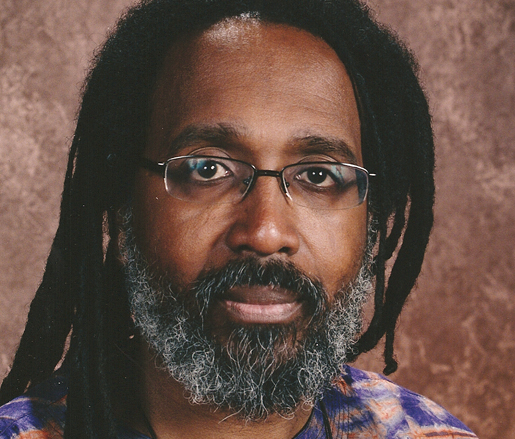
In our final countdown to Wednesday's 2012 James Beard Foundation Leadership Awards, we're introducing you to each of the five visionaries being honored for their outstanding contributions to creating a healthier, safer, and more sustainable food world. We've already filled you in on Dr. Kathleen Merrigan, Dr. Jason Clay, and Tensie Whelan—and today, we'd like you to meet:
Malik Yakini
Executive Director, Detroit Black Community Food Security Network
When Malik Yakini describes the bumper crop of organic tomatoes, kale, and salad greens that he and his team harvested this year at D-Town Farm, a seven-acre site in a public park in Detroit and the largest endeavor of the DBCFSN, he isn’t simply taking pride in the produce. “The work that we’re doing is not just about food,” Yakini emphasizes. “We’re planting seeds of consciousness at the same time that we’re planting seeds that will grow into fruits and vegetables.”
For this lifelong social justice activist, transforming consciousness means promoting self-sufficiency and building a sense of community empowerment—all within the context of “traditional African cultures and our own historical legacy of resistance to oppression.” To this end, DBCFSN also runs the Ujamaa Food Co-op, a monthly buying club for obtaining groceries at below-retail prices, set to open as a full-service retail store within the next two years.
Yakini founded DBCFSN in 2006 to counter a food system that has reduced his city to what has been termed a “food desert.” Many Detroiters live nowhere near a supermarket but must obtain “what could really only nominally be called food,” he explains, from fringe food locations like gas stations or party stores. “Since we’re faced with a lack of fresh, healthy produce in Detroit, we thought growing our own food is one way of addressing that. We see ourselves as creating a model that we hope will inspire other people in the city,” says Yakini.
In the former automotive center of the world, 20 to 30 percent of residential lots are now vacant, as thousands of unsafe buildings have been demolished by the city. But rising from that rubble is a major urban agriculture movement, with Yakini as one of the significant players.
He’s also inspired by Growing Power founder and CEO Will Allen, who, in turn, admires Yakini for “his commitment to improve the lives of all the citizens of Detroit.” Says the 2011 JBF Leadership Award recipient, “Malik Yakini is truly one of the strongest community leaders in the country because he is unafraid to tell the truth.”
Yakini acknowledges that improving Detroit’s food security involves more than creating access. It also requires a cultural shift away from the emotional attachment to unhealthy food—which DBCFSN addresses with a public education campaign that includes the “What’s for Dinner?” lecture series and the Food Warriors Youth Development Program, which teaches youth about problems with the current food system and the virtues of sustainable agriculture.
DBCFSN also fosters a localized food system at an advocacy level: it’s the lead organization in writing the city of Detroit’s Food Security policy and in the 2009 creation of the Detroit Food Policy Council, which Yakini chaired until this spring.
Clearly Yakini is not slowed down by complacency. “I can’t really stop and pat myself on the back, because the majority of people in the city of Detroit are still impacted by food insecurity and food injustice.”
About the James Beard Foundation Leadership Awards
The 2012 JBF Leadership Awards recognize visionaries from a broad range of backgrounds, including government, nonprofit, and literary arts, who are working toward creating a healthier, safer, and more sustainable food world. This year’s honorees were chosen by an advisory board comprised of a dozen experts from diverse areas of expertise, as well as last year’s Leadership Award recipients. Now in its second year, the Leadership Awards recognize specific outstanding initiatives as well as bodies of work and lifetime achievement. Winners will be honored at a dinner ceremony that will take place during the James Beard Foundation Food Conference on October 17 in New York City. For more information, visit jbfleadershipawards.org.
Saturday, September 22, 2012
D-Town Farm: D-Town Farm’s Sixth Annual Harvest Festival this S...
D-Town Farm: D-Town Farm’s Sixth Annual Harvest Festival this S...: D-Town Farm’s Sixth Annual Harvest Festival "Don't forget, D-Town Farm's 6th Annual Harvest Festival takes place this Saturday, Sep...
Thursday, September 20, 2012
D-Town Farm’s Sixth Annual Harvest Festival this Saturday, September 22 and Sunday September 23 from noon - 6:00 p.m.
D-Town Farm’s Sixth Annual Harvest Festival
"Don't forget, D-Town Farm's 6th Annual Harvest Festival takes place this Saturday, September 22 and Sunday September 23 from noon - 6:00 p.m. Vegan Soul Chef, Bryant Terry, gives keynote on Saturday. Urban farming guru Will Allen gives keynote on Sunday. Vendors, farmers market, live music, learn shops on bee-keeping, breastfeeding, gardening, composting, cooking demos, children's activities, hay rides, farm tours and more. You don't want to miss this. www.detroitblackfoodsecuritynetwork.com.
 |
| Will Allen, Speaker & Author of The Food Revolution |
 |
| Bryant Terry, Speaker & Author of Vegan Soul Kitchen |

Wednesday, September 19, 2012
The Sixth Annual D-Town Farm Harvest Festival will take place on Saturday, September 22 and Sunday September 23 from noon – 6:00 p.m. both days. The family friendly event will feature farm tours, children’s activities, “learn-shops” on bee-keeping, breastfeeding, gardening, composting and a variety of other topics,live music, food preparation demonstrations, speakers, a farm stand and other vendors. |
|
| Will Allen, Speaker & Author of The Food Revolution |
|
| Bryant Terry, Speaker & Author of Vegan Soul Kitchen |
Wednesday, August 29, 2012
D-Town Farm: D-Town Farm HARVEST FESTIVAL, Sat.-Sept.22 & Sun. ...
D-Town Farm: D-Town Farm HARVEST FESTIVAL, Sat.-Sept.22 & Sun. ...:
This year the festival will feature and arthors' tent with book signing by a number of health and food authors including Will Allen, author of The Food Revolution, Yvelette Stines, author of Vernon the Vegetable Man, Andrea King-Collier, author of Black Women's Guide to Black Men's Health, Ray Stone, author of Eat Like You Give a Damn: Beginning Your Lifestyle Transition and Bryant Terry author of Vegan Soul Kitchen (VSK): Fresh, Healthy, and Creative African American Cuisine, and his latest book: The Inspired Vegan: Seasonal Ingredients, Creative Recipes, Mouthwatering Menus. For More info call (313)345-3663 or visit our Website at www.detroitblackfoodsecuritynetwork.com. We can also be found on facebook at Detroit Black Community Food Security Network.
D-Town Farm’s Sixth Annual Harvest Festival
The Sixth Annual D-Town Farm Harvest Festival will take place on Saturday, September 22 and Sunday September 23 from noon – 6:00 p.m. both days. The family friendly event will feature farm tours, children’s activities, “learn-shops” on bee-keeping, breastfeeding, gardening, composting and a variety of other topics,live music, food preparation demonstrations, speakers, a farm stand and other vendors.
D-Town Farm HARVEST FESTIVAL, Sat.-Sept.22 & Sun. Sept.23, 2012, NOON 'til 6PM both days
 | ||||
D-Town Farm’s Sixth Annual Harvest Festival
The
Sixth Annual D-Town Farm Harvest Festival
will take place on Saturday, September 22 and
Sunday September 23 from noon – 6:00 p.m. both days. The family friendly
event will feature farm tours, children’s
activities, “learn-shops” on bee-keeping, breastfeeding, gardening,
composting and a variety of other topics,live
music, food preparation demonstrations, speakers, a farm stand and other
vendors.
|
 |
| Will Allen, Speaker & Author of The Food Revolution |
 |
| Bryant Terry, Speaker & Author of Vegan Soul Kitchen |
Subscribe to:
Posts (Atom)